Why some growing brands move from Shopify themes to Next.js
Shopify themes are a solid starting point for many online stores. They help brands launch faster, keep the setup relatively simple, and cover the needs of a standard e-commerce website.
Why Shopify themes work well in the beginning
Shopify themes are often the most practical way to launch an online store quickly. They simplify setup, reduce development time, and cover the needs of many standard e-commerce businesses.
For brands at an early stage, that convenience can be the right choice.
Where Shopify themes start to feel limiting
As more apps, scripts, and adjustments are added, a theme-based store can become harder to control.
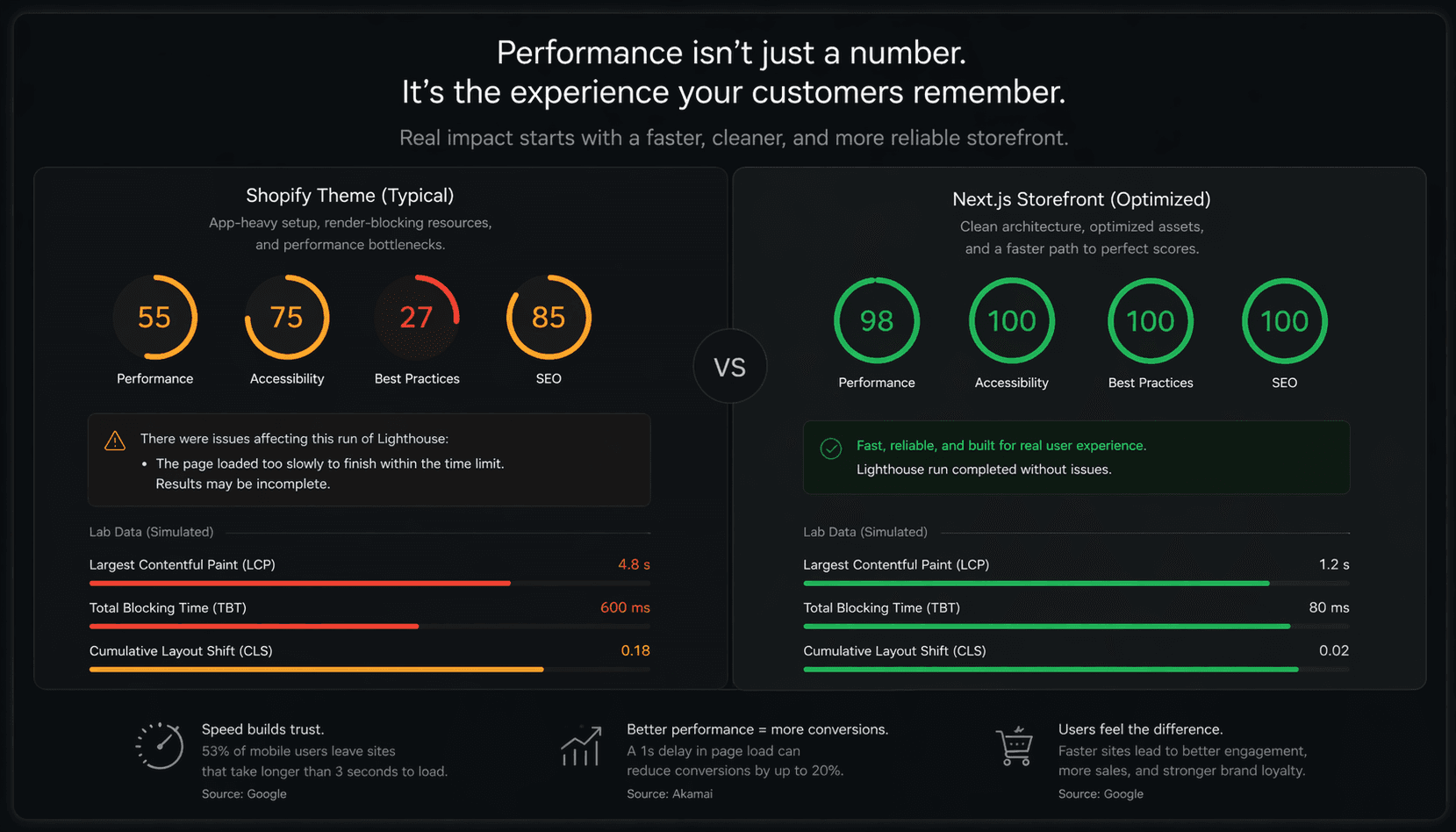
It often shows up in measurable ways: Lighthouse performance scores dropping below 50, large layout shifts during load, delayed interactivity on mobile, or multiple third-party scripts blocking the main thread.
Mobile users may experience slow page transitions, filtering that reloads the entire page, or product pages that take several seconds to become interactive.
This doesn’t happen because Shopify is weak, but because the front end is carrying more than the original theme was designed for.
Design decisions become constrained by the structure of the theme, and custom interactions often require workarounds instead of intentional front-end decisions.
Why Next.js becomes attractive
Next.js becomes attractive when the storefront needs to feel faster, more intentional, and more aligned with the brand itself. It gives more control over loading behavior, page transitions, layout structure, and interactive details — the things users may not always name, but definitely feel.
A standard theme can be enough when the goal is simply to launch. But when the website needs to support a stronger visual identity, smoother browsing, and a more refined path to purchase, the limits of a prebuilt front end start to show. That is where a custom storefront begins to create real value.
Headless as the middle ground
Moving to Next.js does not mean giving up Shopify. In a headless setup, Shopify can still manage products, inventory, and checkout, while Next.js becomes the custom storefront layer.
Sites that meet Web Vitals thresholds are 24% less likely to have users abandon page loads before content appears.
Source: Chromium Blog
Final thought
Not every store needs Next.js from day one. But when a brand starts caring about perception, flow, and conversion — not just basic functionality — the storefront often needs to do more than a standard theme can comfortably support.